
Pictured: Jason Van Horn, of bermstyle.com.
This post is my reflections on my experiences wearing the same pair of jeans every day for one month (so far… more to come).
Not for no reason, I have been wearing the same pair of jeans (“Unbranded” UB301 straight fit 14.5oz indigo selvedge) for at least 6 hours every single day, for 31 days straight. These jeans are not any ordinary jean. Rather, they are made with raw denim. In this context, raw denim means that these jeans have (basically) never been washed, rinsed, or soaked with water. Typically, jeans are dyed to a deep indigo color, and then heavily faded by machines through the use of high-pressure water in order to reach the preferred color (see: light-wash jeans, stone-wash, etc). Not only does this washing process fade the indigo dye on the fabric, it also softens the material (and also uses lots and lots of water that then is discarded as waste).
Comparatively, raw denim jeans are received by the consumer in a dark indigo color, and (depending on its weight) the fabric is decently stiff (or, with heavier fabrics, extremely stiff. so much so that the jeans are able to stand up on their own at first). These jeans are then faded, not all at once through high-pressure water, but rather slowly over time, based on how they are worn and creased. Indigo dye fades away in “high activity” areas of the denim first, such as the knees, thighs, ankles, butt.

(literally award-winning fades by Michael Smith)
As every human is different, and everyone wears their jeans differently, does different activities in their jeans, and so on and so forth, the denim fades in a pattern that is unique to the wearer. Such fades, of course, are a phenomenon that takes place over many months and years of serious, sustained wear. These fades are coveted by raw denim enthusiasts. High-contrast fades are a signifier of commitment, individuality (good), and a life that has been lived. It is not really something that can be rushed, at least not if one wants “”honest”” results.
This is but a cursory overview of what makes raw denim distinct from ““regular”” denim. There is a lot to be said about the science of textile construction, dying methods, cotton farming, etc. But that is not what I am here to discuss (see: this very informative guide from Heddels if you are looking for such information). What I am here to write about, at least in this particular blog post, is what happens in my mind when I wear one pair of jeans, every day, with the knowledge that every movement gets written into the memory of the fabric. When wearing clothes goes from, well, simply wearing clothes, to creating a living document, aging like fine wine (but I don’t drink, so what do I know about that?).
I want fades. Beautiful high-contrast fades. These are developed through wearing the denim hard, every day. And so, every day, I wear my jeans and I wear them as hard as my lifestyle allows (chronic hip and back pain means I can’t go for jogs (and even if I could jog and wanted to jog, I don’t think I’d wear jeans while doing so), but I can certainly walk, and maybe one day soon I’ll own a bike that I can ride around town too (there are strong connections between the bike community and the raw denim community)). When I wake up, I have found myself excited for the day, excited to move about this world that we have found ourselves inhabiting, because to move about this world is to develop f a d e s. I have found myself preferring to walk from place to place, as opposed to driving, because walking develops nicer fades (this is conjecture, but I believe it nonetheless).
What is a more individualistic (bad) and isolated (bad) form of transportation than driving? All of us in our separate boxes, connected to one another only by the roads we share? And the rise of an automobile-dominated society goes hand-in-hand with the rise of suburbia (bad). How are we supposed to get our fades in unwalkable cities?
An aside: I certainly don’t want to say that walking = good and not walking = bad. I’m no ableist (or at least, I try my damndest not to be). There are many days, when my chronic pain flares up, where walking is not an option for me. On those days, I still get my fades in the best I can. If anything, a critique of suburbia is in-line with critical disability theory perspectives. Sprawling suburban developments and a lack of viable public transportation options construct disability, certainly (this line of thought is not uniquely mine). But maybe that’s an argument for another blog post.
An un-aside: And so I walk more frequently now, and I find myself excited to get up in the morning and get my semi-proverbial steps in, and what is the outcome of this? Fades, of course. But also, a massively increased range of opportunities for me to encounter other humans. Moving about this world fleshly exposed results in me coming face-to-face (and not in a mirror dimly) with others, and this of course gives rise to the possibility for interaction, communication, meeting. As small as a passing nod and “Hi, how are you?”, to as big as running into an old friend who you haven’t seen in awhile, when we are not behind the wheel of a large automobile we are opened up to the social world. It is a simple calculus.
What does a world look like in which we are all (proverbially or literally) always in the pursuit of getting our fades in? What does it look like for a society to be built around getting sick fades? Certainly this is a tongue-in-cheek thought experiment, but I think there is a kernel of meaning here: and so framed another way, what if our society prioritized a way of living that was, at its core, relational? interdependent?
In sum: prioritizing fades leads to increased possibilities for interpersonal interactions and occurrences. at least, increased possibilities if prior you were a hermit, or someone who preferred to drive instead of walk.
I’ve only been wearing these jeans for a month (and a day, now), so maybe these thoughts will change as my denim ages out of their infancy. But at present, this is what I think.

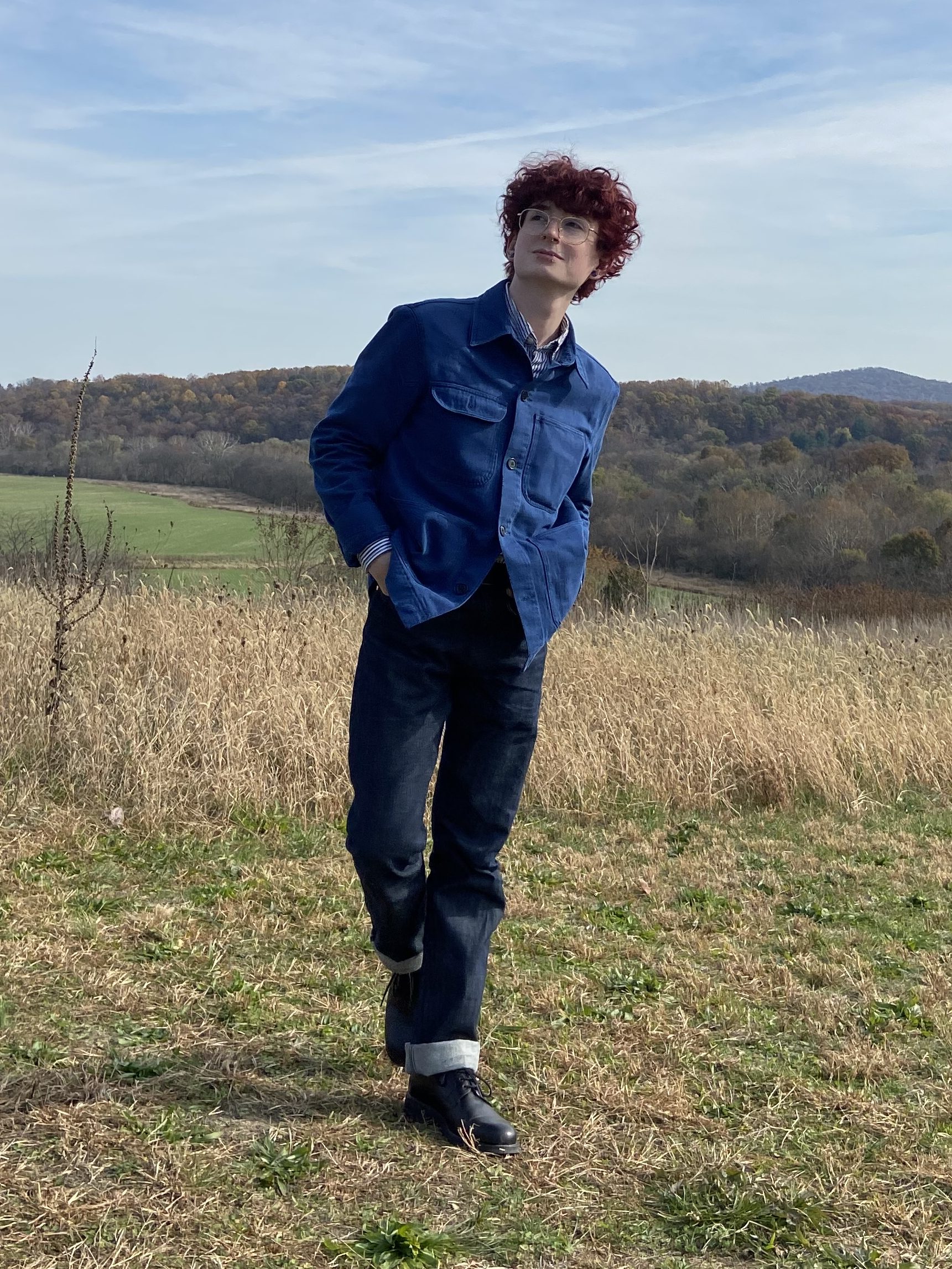
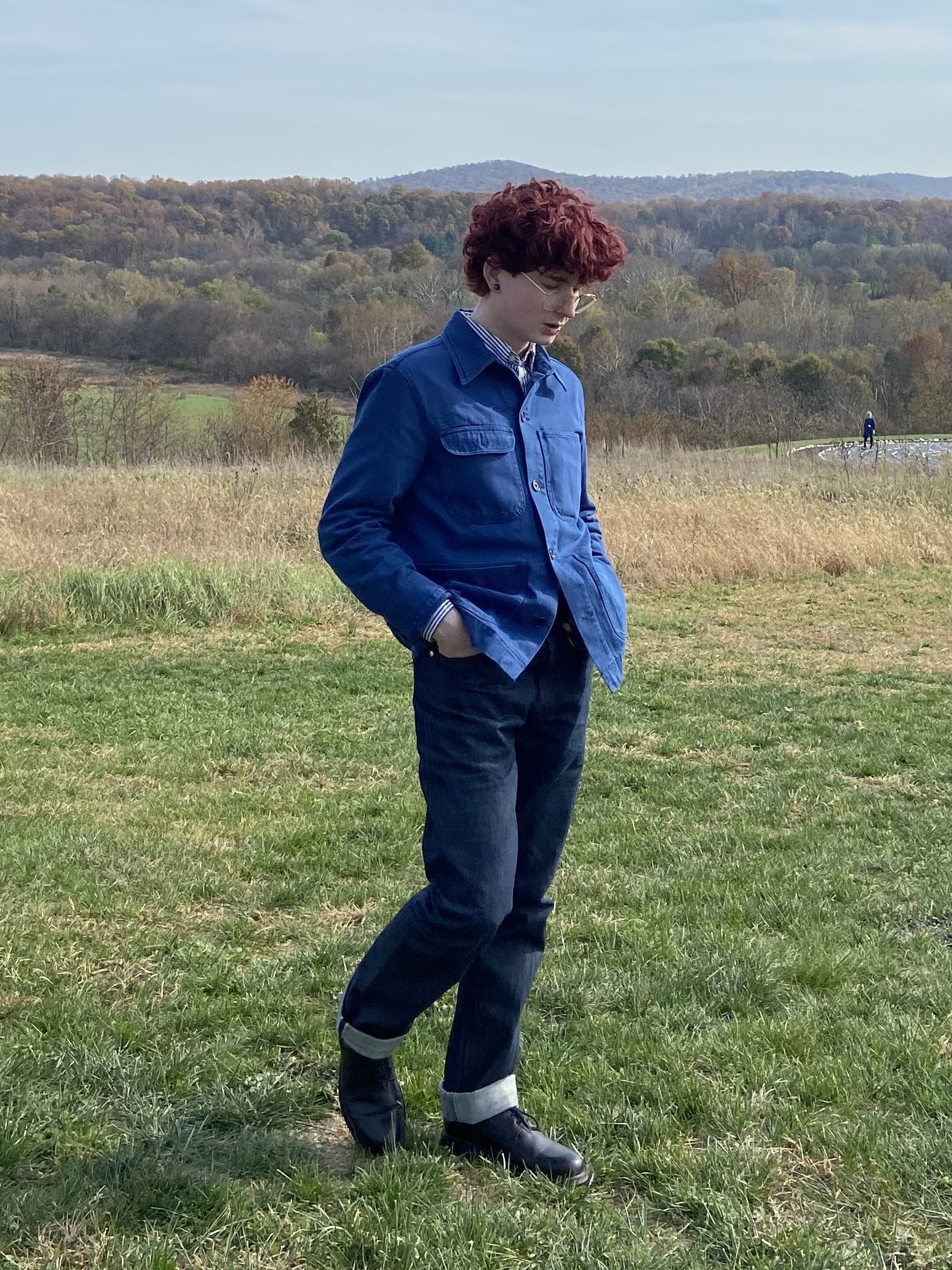
Photo credits: my lovely friend Christine Young
 Becoming Whatever
Leave a comment